
Investigating Temporal Variations in Endorsement Patterns Within Adaptive Social Frameworks
Researchers examine how endorsement patterns shift across different time scales inside platforms that adjust their recommendation systems based on user behavior, and these investigations track data from multiple sources to identify recurring cycles rather than isolated spikes. Studies show that endorsements, such as likes, shares, and comments, follow distinct rhythms tied to daily routines, weekly events, and seasonal changes, while adaptive frameworks respond by altering visibility weights in real time.
Background on Adaptive Social Systems
Adaptive social frameworks rely on machine learning models that update continuously, and they process endorsement signals to refine content distribution across user networks. Data from platform logs indicate that these systems collect timestamps alongside each interaction, which allows analysts to map variations against external factors like time zones or global events. Observers note that early implementations focused on static metrics, yet later versions incorporated temporal layers to predict when certain posts would gain traction.
One analysis of large-scale datasets revealed that endorsement velocity often peaks during evening hours in major urban centers, while morning periods show steadier but lower rates of accumulation. Researchers at various institutions compile these records to test hypotheses about feedback loops that emerge when algorithms amplify early signals.
Methods Used in Temporal Analysis
Investigators apply time-series decomposition techniques to separate trend, seasonal, and residual components within endorsement streams, and they cross-reference these with metadata on user demographics and content categories. Tools from statistical packages help isolate periodic functions that repeat every 24 hours or every seven days, whereas machine learning classifiers detect anomalies that deviate from established baselines.
Teams frequently segment data into hourly, daily, and monthly buckets to compare patterns across regions, and this approach highlights differences between platforms that operate globally versus those focused on specific locales. Evidence from multiple studies demonstrates that incorporating calendar data, such as holidays or election cycles, improves the accuracy of forecasts generated by adaptive models.
Observed Patterns Across Time Scales
Short-term variations appear within single days, where endorsements cluster around lunch breaks and after-work periods, yet longer-term shifts emerge over weeks as user interests evolve in response to news cycles. Figures reveal that certain topics sustain momentum for extended intervals, while others decay rapidly unless the framework intervenes with boosted distribution.
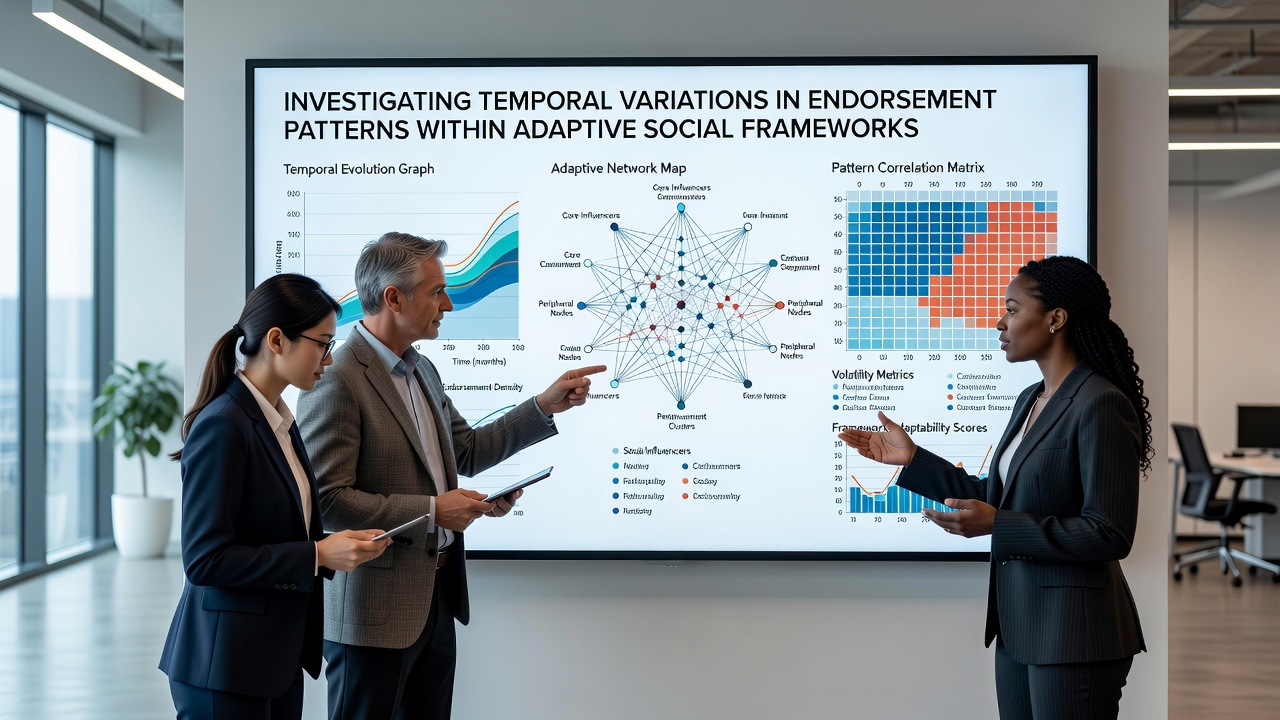
Monthly aggregates often expose broader trends linked to platform updates or policy changes, and analysts track these to determine whether adaptations stabilize or disrupt existing endorsement flows. Data indicates that frameworks which adjust thresholds based on historical temporal data achieve more consistent engagement levels across different user cohorts.
Case Examples from Platform Data
One documented instance involved a major network where endorsement rates for video content doubled during weekend evenings compared with weekday mornings, prompting the system to recalibrate its ranking parameters accordingly. Researchers tracked the adjustment period and found that the framework reached equilibrium after several days of iterative updates.
Another examination covered community-driven sites that experienced spikes around recurring events, such as product launches or cultural festivals, and these observations helped refine prediction models that account for both endogenous and exogenous timing factors. Reports from academic groups show similar patterns across diverse datasets collected between 2024 and 2026.
Developments Noted in October 2026
During October 2026, several research consortia released updated findings on how adaptive frameworks handled endorsement variations amid increased global connectivity, and these reports highlighted improved detection of cross-time-zone interactions. Organizations such as the European Commission published summaries of digital platform audits that included temporal metrics, while Canadian research centers contributed comparative studies on regional differences.
Analysts integrated these new datasets with prior records to assess whether recent algorithm refinements reduced unintended amplification of time-sensitive endorsements, and initial results pointed to measurable stabilization in several tested environments.
Implications for Framework Design
Designers incorporate temporal features into core algorithms to balance immediate and sustained endorsement signals, and they test these additions through controlled experiments that monitor user retention over multiple cycles. Evidence suggests that frameworks lacking such features encounter higher variance in content visibility, which affects overall platform dynamics.
Industry reports from sources including the Pew Research Center and OECD working papers detail how temporal modeling contributes to more predictable outcomes in large networks, and ongoing work examines integration with emerging standards for data transparency.
Conclusion
Investigations into temporal variations continue to inform refinements in adaptive social frameworks, as researchers compile evidence from expanding datasets and evolving methodologies. Patterns identified across time scales provide concrete inputs for system adjustments, and continued monitoring supports ongoing evaluation of these complex interactions.