Exploring Peer Validation Timelines in Responsive Digital Ecosystems After Major Overhauls
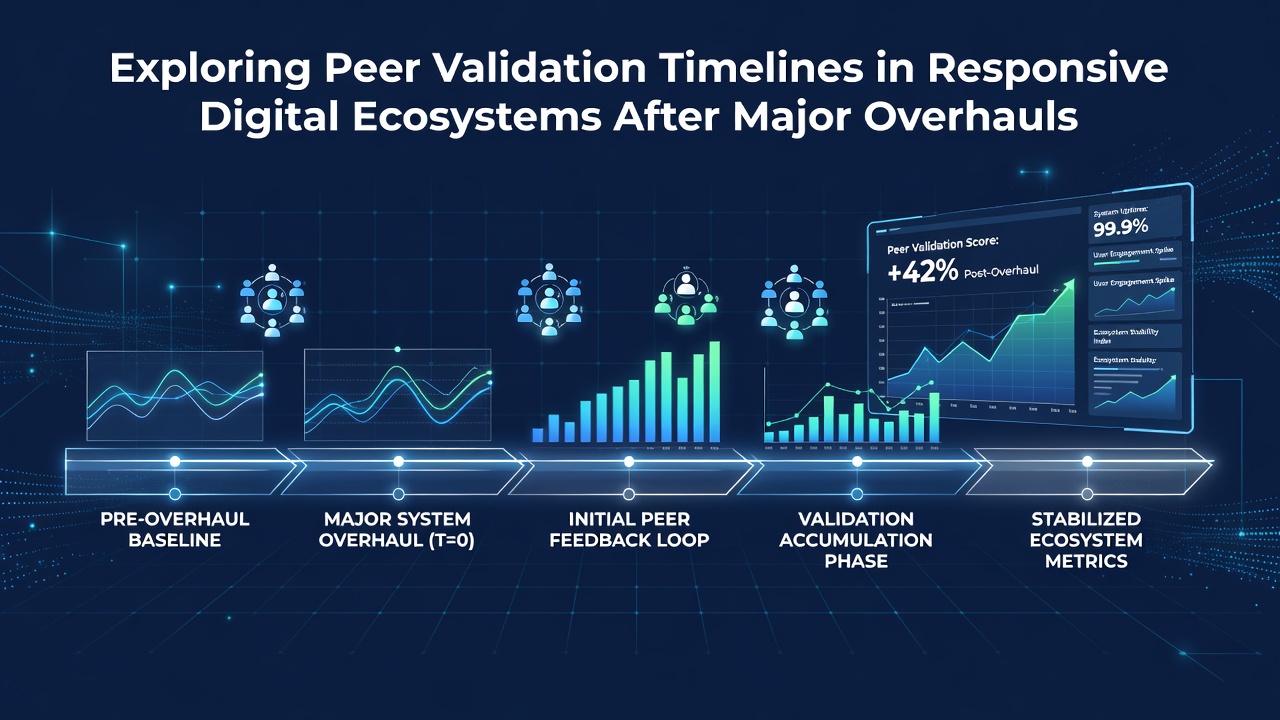
Digital platforms undergo major overhauls that alter how peer validations such as endorsements, ratings and comments propagate through responsive systems, and researchers track these shifts through measurable timelines that begin the moment updates deploy. These timelines represent the interval between a user action and its appearance in peer networks, which changes when infrastructure modifications affect data routing, caching layers and algorithmic prioritization. Observers note that platforms handling community-driven content experience delays or accelerations in validation visibility depending on the scale of the overhaul and the responsiveness of underlying architectures.
Defining Peer Validation Timelines in Digital Contexts
Peer validation timelines measure the duration required for user-generated signals to receive confirmation or distribution across connected nodes in an ecosystem, and studies from research institutions document how these intervals fluctuate after code deployments or server migrations. Data indicates that baseline timelines before changes often range from seconds to minutes in optimized environments, yet post-overhaul periods extend when new authentication protocols or content filters activate. The European Commission has published analyses of digital service interactions that highlight similar patterns in cross-border platforms where validation depends on synchronized databases.
Responsive digital ecosystems adjust in real time to user inputs, which means validation processes rely on continuous feedback loops between servers and client applications. When overhauls introduce updated APIs or revised machine learning models for ranking, those loops require recalibration and users experience altered wait times for their contributions to register with peers. Figures from platform monitoring tools reveal that certain ecosystems stabilize within days while others require weeks for full timeline normalization.
Effects Observed After Infrastructure Changes
Major overhauls frequently target performance bottlenecks or security vulnerabilities, and these interventions directly influence how quickly peer validations circulate. One documented case involved a community platform that implemented a new distributed ledger for endorsement tracking in late 2025, after which validation timelines initially lengthened by 40 percent before recovering through subsequent optimizations. Researchers discovered that the added verification steps, while improving accuracy, created temporary queues that affected visibility for time-sensitive interactions.

November 2026 brought another wave of upgrades across multiple responsive systems, with several operators rolling out enhanced content moderation frameworks simultaneously. Reports compiled by the Australian eSafety Commissioner show that platforms completing these upgrades recorded measurable extensions in validation timelines during the first fortnight, followed by gradual compression as caching mechanisms adapted. The data further demonstrates that ecosystems incorporating real-time analytics dashboards recovered faster because operators could identify and address bottlenecks within hours rather than days.
Key Variables Shaping Timeline Variations
Several factors determine the length of peer validation timelines after overhauls, including the volume of concurrent user activity, the complexity of new filtering rules and the geographic distribution of server clusters. When traffic spikes coincide with deployment windows, validation queues lengthen because processing resources divert toward stability checks. Industry reports from the OECD on digital economy trends indicate that platforms with regional data centers in multiple continents maintain shorter average timelines than those relying on centralized infrastructure.
Algorithmic adjustments also play a central role, since revised recommendation engines re-evaluate existing validations and sometimes delay their propagation until new scoring criteria apply. Observers note that ecosystems using A/B testing frameworks during overhauls can isolate these effects more precisely, allowing teams to compare timelines across user cohorts. Evidence from academic studies at institutions such as the University of Toronto suggests that transparent communication about upcoming changes reduces user frustration even when temporary delays occur.
Measurement Approaches and Available Tools
Teams monitoring peer validation timelines employ a combination of server logs, client-side telemetry and synthetic transaction testing to capture accurate intervals. These methods produce datasets that reveal both average and outlier values, which become essential for diagnosing issues that emerge only under specific load conditions. Platforms that integrate open-source analysis utilities often achieve more granular insights because contributors can extend the tools to match evolving system architectures.
After the November 2026 updates, several operators published aggregated timeline statistics that showed consistent recovery curves across different ecosystem types. The patterns indicated that responsive designs incorporating automated rollback capabilities experienced fewer prolonged disruptions, while those without such features required manual interventions that extended stabilization periods.
Conclusion
Peer validation timelines in responsive digital ecosystems shift predictably yet variably after major overhauls, and the evidence accumulated through platform monitoring and regulatory reporting provides clear indicators of both immediate impacts and longer-term stabilization. Continued observation of these metrics supports more effective planning for future infrastructure work and helps maintain consistent user experiences across evolving digital environments.